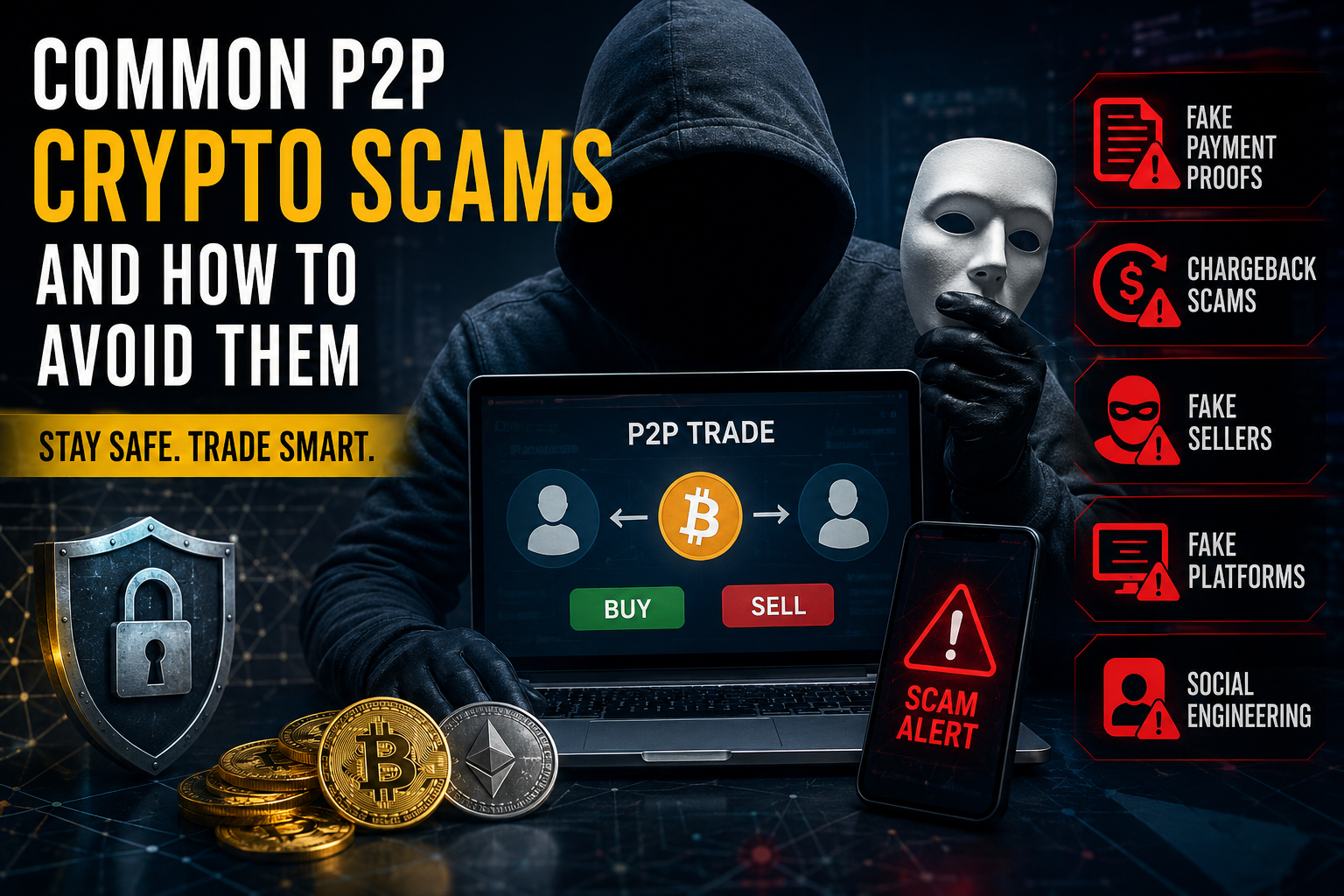
Peer-to-peer (P2P) crypto trading allows users to buy and sell cryptocurrency directly without intermediaries. While this creates more freedom and flexibility, it also introduces additional risks.
Understanding common P2P crypto scams and how to avoid them is essential for safe trading, especially because crypto transactions are irreversible and often happen between strangers.
This guide explains the most common scam patterns and how to protect yourself effectively.
What Are P2P Crypto Scams?
P2P crypto scams are fraudulent methods used by buyers or sellers in peer-to-peer marketplaces to trick users into sending crypto or fiat without receiving what was agreed.
Because transactions are direct, scammers rely on manipulation, false trust signals, and lack of verification.
Once funds are sent in crypto, they cannot be reversed, which makes prevention the only real protection.
Fake Payment Proof Scams
One of the most common scams in P2P trading involves fake payment confirmations.
How it works:
A buyer sends a fake screenshot or edited proof claiming they completed the payment and pressures the seller to release crypto immediately.
How to avoid it:
- Never trust screenshots as proof of payment
- Always verify funds directly in your wallet or bank account
- Only release crypto after full confirmation
Chargeback Scams
Chargeback scams usually occur when fiat payment methods are used.
How it works:
The buyer sends payment, receives crypto, and later reverses the transaction through a bank or payment provider.
How to avoid it:
- Be cautious with reversible payment methods
- Prefer irreversible or verified payment channels when possible
- Wait for full settlement before releasing crypto
Fake Seller or Buyer Profiles
Scammers often create fake profiles to appear trustworthy.
How it works:
They use stolen images, fake trading history, or fabricated reviews to build credibility and then initiate fraudulent trades.
How to avoid it:
- Check trading history and reputation carefully
- Avoid users with no verified activity
- Be cautious of unusually good offers
Unrealistically Low Prices
If a deal looks too good to be true, it usually is.
How it works:
Scammers attract users with extremely low prices to trigger fast decisions without proper verification.
How to avoid it:
- Compare prices with market rates
- Avoid emotional or rushed decisions
- Treat unrealistic discounts as high-risk signals
Pressure and Urgency Scams
Scammers often try to force quick decisions to reduce your ability to verify details.
How it works:
They use urgency tactics like “limited offer” or “must act now” to push users into unsafe trades.
How to avoid it:
- Never rush transactions
- Take time to verify every detail
- Walk away if pressure is applied
Fake Middlemen or Agents
Some scammers pretend to act as trusted intermediaries or deal “protectors.”
How it works:
They claim to secure transactions but instead manipulate communication or redirect payments.
How to avoid it:
- Only use official platform systems
- Avoid third-party intermediaries
- Keep transactions direct and verifiable
Advanced Social Engineering and Platform-Based Scams
Some advanced scams use more complex psychological manipulation techniques.
Scammers may:
- use VoIP or internet-based phone numbers to appear legitimate
- impersonate real identities on messaging apps
- push users to move communication off-platform
- request payments through external bank transfers or institutions
- show delayed or manipulated transaction confirmations
These tactics are designed to create false trust while removing platform protection.
How to avoid them:
- Never move transactions off-platform
- Do not trust phone calls or identity claims alone
- Verify all transactions through official systems
- Ignore “balance screenshots” or delayed confirmations
Payment Card Security Warning
Never share sensitive payment card details during P2P crypto trading.
This includes:
- full card number
- CVV security code
- expiration date
- back side of the card
Legitimate transactions do not require sharing full card details. Any request for this information is a strong red flag.
Why this is dangerous:
Sharing card data can lead to:
- unauthorized transactions
- identity theft
- financial loss
- irreversible damage
👉 If someone asks for full card details, stop the transaction immediately.
How to Stay Safe in P2P Trading
To reduce risk in P2P crypto trading, always follow core safety rules:
- Verify payments before releasing crypto
- Never trust screenshots or claims alone
- Avoid off-platform communication
- Use trusted and structured trading environments
- Take time before making decisions
In P2P trading, safety depends on user behavior, not just the platform.
Internal Safety Insight
For a broader understanding of protection strategies, read our guide on P2P crypto trading safety to learn how to structure safer transactions and reduce exposure to scams.